Category: Uncategorized

  • 11: Gerrit

    A true tale from a time long gone

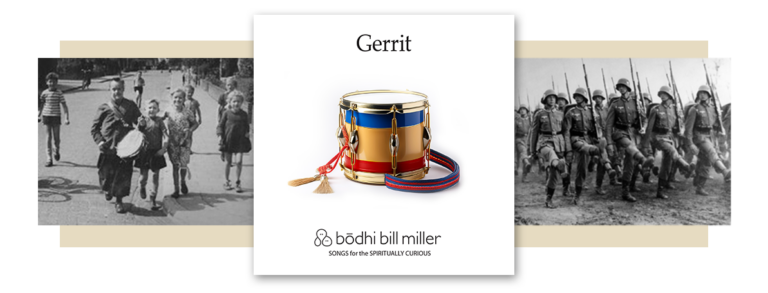
    MY WIFE MARIANNE was born during WWII in Nazi-occupied Holland and grew up Wageningen, a Dutch town near the River Rhine. Wageningen is famous for being where the Germans surrendered to the Canadians, ending the war in Holland. Less well known, except to the older local villagers, is this story I learned from her.

    “Here’s a toast to things we can’t explain…”

    Gerrit was their beloved “village idiot,” a developmentally-delayed young man who loved to play his drum in the town square. Something about his story touched some deep part of me as it surfaced, quite unexpectedly, in this song.

    “To the things we’ve lost

        and the stories that remain…”

    Who knows where it came from? Messing with my guitar, I had stumbled upon a compelling chord progression. As I played it, the lyric came, as usual, from some other dimension. And, as usual, the ending caught me completely by surprise.

    I hope you enjoy it.

    NOTE: Turn off subtitles/closed captions.

    This impersonal age

    IN THE EARLY 1990s, a few years before he died, my dad coined the phrase, “This impersonal age.” Considering how far we’ve moved from village life into AI “conversations” and artificial intimacy, I think he was more than prescient. Seems we are now both totally connected and totally on our own.
    We now appear at the precipice of all that unraveling. Major digital systems are breaking down all around us: banking; air travel; the National Security Agency; email services; Apple; Microsoft. All failing in just a single week, said to be unrelated by authorities with little to no credibility.

    More chillingly, potential killer AI bot swarms, whether by accident of intent, threaten to attack and even disable the internet—now our global central nervous system. Are any adults in charge? Anyone able to regulate this race to oblivion? Or has it already escaped our control?

    Worse, based on available evidence, even our own president—who takes “no responsibility for anything”— is unabashedly more focused on personally profiting from AI than regulating its development to avoid a global disaster.

    If so, where is spirituality in all this? I propose in two ways.

    First, action: our CONCERN should be our CALL TO ACTION—using classic non-violent confrontation. Simply contacting congressional reps matters. Tapping into non-profit climate/government groups with local chapters matters more:

    Nothing can be accomplished alone—except maybe alienation and despair.

    Second, spirituality reminds us we are just visiting, just passing through. Time to let go of any sense we are entitled not to suffer from an irrational, sadistic era, not to endure bad outcomes, even not to die badly. Life doesn’t work that way. Never has. Yet there is an unchangeable base of pure light beneath this impermanent realm. Keep seeking it—ironically with the very light you are seeking it with.

    This is a both/and situation. Action and stillness. Action in stillness.

    Namaste.

  • 10: Slip Away

    Exploring the mystery of dying

    I WROTE SLIP AWAY for my mother after she was diagnosed with inoperable stage-4 cancer. I was fortunate to be at her bedside and to sing this to her, in coma, as she passed. It was profoundly transcendent for me, and judging by her physical transformations, for her as well.

    “Little One, don’t be afraid, as your old life starts to fade…”

    Dying is a mysterious process. The experience of being with the dying is impossible to describe except to say it can be profoundly, if unexpectedly, spiritual. Mine was. So much so that shortly after her death, I volunteered for hospice where I discovered that end-of-life chaplaincy was not about inserting religion but drawing out what is meaningful from the dying and their loved ones—what I began to call spiritual improv. It was no less creative than designing an ad campaign, while much more real and satisfying. I was smitten.

    “Let it go, and leave it here; as you drift off, do not fear…”

    While my work as a chaplain is covered in bodhibill.com/about, this is not about me. The reason I’m posting Slip Away as part of the Time Machine album is to open up the mystery of dying to a death-phobic culture. As such, it only works if you sit still and listen deeply.

    I hope it opens a new space in your heart.

    I offer Slip Away in two versions: a 3-minute song format and as a 12-minute meditation for the dying to ease their transition.

    A death of lived spiritual experience

    CURIOUSLY, for such a death-phobic culture, American television and movies are fascinated by it—but have no idea what death actually looks like.

    In a 2012 Funeralwise TV Body Count Study, researchers examined 320 episodes from 40 popular television series found:

    • An average of 7 dead bodies per episode.
    • Crime and courtroom dramas featured nearly 3 per episode.
    • Action/adventure shot up to nearly 15 per episode.
    • Science fiction/fantasy: nearly 10 per episode.

    I watch TV and movies too and have yet to see a fictional depiction of death that appeared authentic—and during my chaplaincy work, I witnessed dozens of deaths and hundreds of real bodies so I do know what it looks like.

    First off, actual dead bodies do not appear as if they are sleeping. That myth started during the Civil War when embalming was introduced and carries on today.

    In the process, Americans lost the wisdom of their elders…

    Second, death has been moved from the home to the hospital or other clinical facility. Up to the turn of the 20th century, people died at home and were laid out in the parlor—a typical feature of an American middle-class house. After WWI, as the culture absorbed the horrific introduction of weapons capable of mass slaughter and death became more senseless and overwhelming, the formal parlor began its transition into the more casual “living” room—a transformation that ended with a flourish post WWII with the midcentury modern design revolution—while dying slowly shifted to outside the home. Meanwhile, cabinetmakers expanded their trade into creating funeral “parlors.” So that, in less than a hundred years, death in America was successfully outsourced.

    In the process, Americans lost the wisdom of their elders about the physicality and spirituality of dying. Instead, it all became make-believe. Dying is like falling asleep (or being hyper-realistically assaulted and/or blown to bits) and its spiritual aspect is, at best, a warm fill-light and soft-focus lens.

    That is a tragic loss that no one blog post can change. But awareness is everything. A spell cannot be broken until we realize we are under its influence. There is much more magic to be found in mundane reality, even if heartbreaking, than at the cineplex if we are only willing to seek it out…

  • 9: KO-EMS two thru four

    Back to where we were

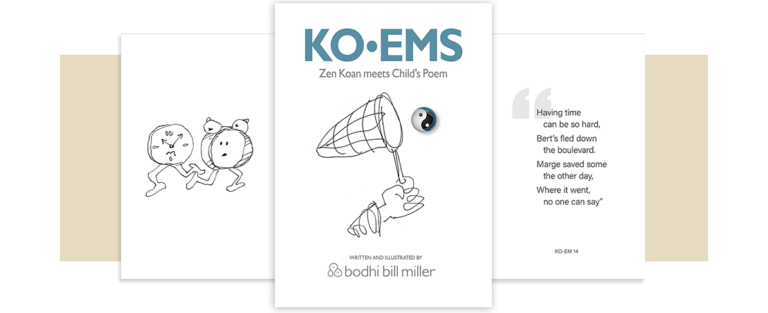
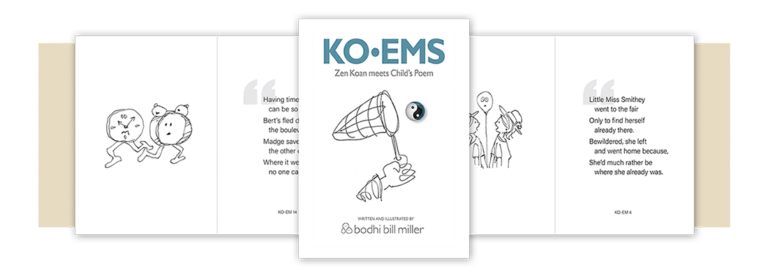
    WE RETURN, where we left off, to our regularly-scheduled program—continuing our theme of sublime silliness. And to make up lost time, I’m offering three KO-EMS videos.

    Sneak preview—here they are in written form:

    KO-EM 2:  Sadly, the song sang on

    Sadly, the song sang on—

             After the music was gone.

    Some hoped she’d sing it again,

             But poor Sadly never knew when.

    KO-EM 3: Once Upon a Twice

    Once upon a twice

             Never sounds as nice

    As when it was a word

             Still waiting to be heard.

    KO-EM 4: Little Miss Smithey

    Little Miss Smithey went to the fair

             Only to find herself already there.

    Bewildered, she left and went home because

             She’d much rather be where she already was.

    Click the links below Play it NOW. Then sit back and enjoy the show.

    Back to a future

    AMAZING how much can change in a week. Since the climate crisis was getting no traction in our body politic, I interrupted my more upbeat programming to insert two songs about that apparently discarded topic. That was then.

    Today, it is conceivable America may once again return to facing dire global challenges like adults. That is hopeful. And while moral imperative is a facet of spirituality, so is silliness—a door back to the pure, innocent, unencumbered joy of childhood.

    So let us embrace both-and. Paradox. Polar opposites.  

    It’s all good…

  • 8: We Can Win

    A great awakening?

    AGAINST ALL ODDS, American democracy is on the verge of an existential electoral victory. Can that happen? We will find out in a few days.

    The climate crisis is a mere subset of that victory—should it come to pass. Currently, under the crushing weight of billionaire crony capitalists, climate emissions continue to increase every year—as I noted in my last blog—hidden behind deafening distractions so we Don’t Hear Nothin’.

    Although the oligarchs may control much of what we see and hear, they do not yet control what we think or do or how we show up and how we vote.

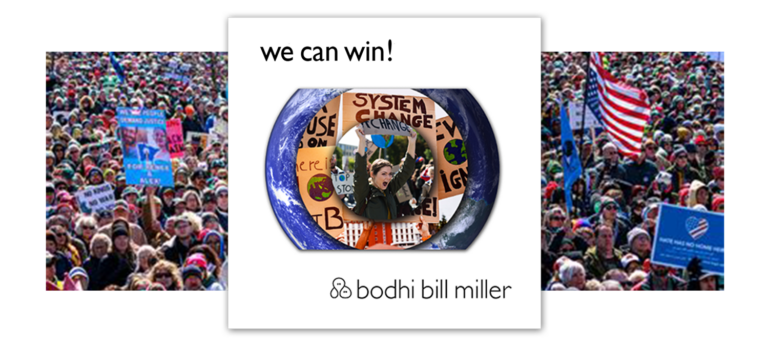
    So I offer We Can Win as a complement to last week’s more gloomy Don’t Hear Nothin’ to remind myself and anyone listening that We Can Win!

    Spirituality is not for sissies

    I WROTE and produced We Can Win six years ago. It received a modest response on YouTube. I expect it will not fare much better this time. Such is the appeal of climate change calls to action.

    We Can Win was relevant in 2020; but regrettably, it is vastly more relevant today in the midst of a deliberate sabotage of climate regulation and a corresponding increase in American atmospheric emissions—an additional 2.4% of greenhouse gases released in 2025 alone.

    Why do I keep hammering on this when Bodhi Bill is supposed to be about spiritual uplift? Because a key component of spiritual uplift is moral imperative. Engaging in the struggle for justice is spiritually uplifting. Action is inspiring.

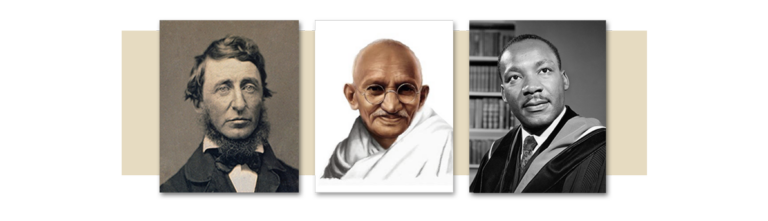
    On the other side of the coin, as Thoreau, Gandhi and King demonstrated, cowardly indifference in the face of systemic injustice or global nihilistic avarice is a hallmarks of spiritual bankruptcy.

    Spirituality is not for sissies.

    As the Sufi’s teach, the goal of spiritual practice is not to numb ourselves to suffering, it is to “die before you die, so you are free to live…”

    If you like this, share it…

  • 7: Don’t Hear Nothin’

    Ignoring the climate crisis? It’s still here.

    I WROTE and produced this music video—Don’t Hear Nothin’—eight years ago. It’s an anthem for climate activism in the face of ongoing major media indifference.

    Nobody much noticed. Few, I predict, will notice now. It’s solemn. It’s depressing. It offers no answers beyond encouraging individual engagement—not exactly an uplifting proposition.

    Until you try it.

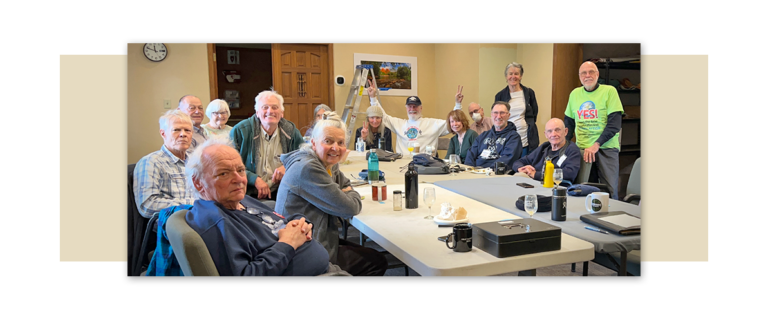
    If you haven’t yet, turns out engaging in activism is inspiring. You meet the best people, smart, funny, creative, energetic, positive.

    But you do have to meet them. You won’t find them while doomscrolling or between commercials on TV. You have to leave your house.

    Turns out, climate hope is on you. On me. On us. In 2000, the Indigenous American Elders proclaimed, “You are the people you have been waiting for.”

    So, what are we waiting for?

    Faith without action is folly

    SO FAR, on this blog, I’ve been sharing the more pleasant aspects of spirituality: independence; kindness; compassion. These are important reminders that there is a deeper dimension to being than this transitory, unpredictable and often painful material existence. But, taken alone, these spiritual aspects can become hollow escapes from the moral burden of awakened existence.

    We are currently ensnared in a dense web of simultaneous global catastrophes. The climate crisis being just one, but one that remarkably remains out of bounds for sustained interest. It is remembered, then forgotten, then rediscovered like some cyclical fad, while the crisis intensifies, behind the headlines, with increasing fury. Explosive wildfires. Unending droughts. Raging super storms. Biblical floods. Yet our lives seem to continue in a dreamlike trance.

    One driver of this complacency is a corporate-controlled media increasing, at all costs, their quarterly earnings—either in their stations or elsewhere. Another is the rise of billionaire oligarchs—oil barons and tech bros—racing to win some nihilistic trophy by being the last one standing on the toxic rubble of a dying planet.

    The rest is on us. Individually. We choose to act or not act. There will be no war declared, no draft, no marching drums, no chest-pounding, patriotic call to arms. If we decide to act, we begin alone.

    I have chosen action, balanced with spiritual practice. What you choose is up to you. But don’t think it doesn’t matter or that you don’t matter. It does. You do.

    Apathy does not lead to enlightenment. Only deliberate action does. Spiritually. Materially. They are two sides of the same coin.

    Namaste.

  • 6: KO-EMS Introduction

    Zen koan meets child’s poem

    A KOAN is an apparently nonsensical phrase used in Zen Buddhism to break through the unseen limitations of the rational mind to perceive its true, non-dual, eternal nature. A classic example is to describe the sound of one hand clapping.

    Koans are NOT funny.

    Children’s poems often are.

    Silly. Whimsical. Nonsensical. No one in his, her or their right mind would attempt to combine them with koans.

    For what it’s worth, I would not have either. Not Intentionally.

    Backstory: I was recovering from bladder cancer surgery and bed-bound for six weeks, lying about, otherwise feeling fine, nothing much to do, when the first one streamed into my mind, unbidden. Then another. And another. Pretty soon, I had seven. Then a dozen. And finally, thirty.

    I don’t know why. They seemed to have a life of their own, each its own little mystery. So, nearly 20 years later, I’ve illustrated them, formatted them into a book, produced little videos and am putting them out in the world.

    I hope you enjoy them. They’ve been a hoot for me.

    When silliness is radical

    IT SHOULD NOT be news that America in the midst of a well-planned, well-financed overthrow of its democracy. The fact that the leader behaves like an incompetent, impulsive imbecile is a convenient ruse—instead, follow the money and motivation. Watching a clown dance on the tip of the iceberg distracts from the real intent hidden beneath the surface.

    Typical of attempted fascist takeovers, the first things to go are hope, spontaneity and joy, violently undermined by fear and threats of violence all to instill a sense of powerlessness.

    Courage is contagious. For courage to be effective, it must employ its most effective, proven weapons: 

    • Non-violent resistance
    • Humor, satire and laughter
    • Inspiring songs and stories
    • Joy in the face of oppression

    What I am offering is not an escape but a respite. Become engaged if you are not. Remain engaged if you already are. Either way, center it in hope, joy and laughter.

    Enjoy…

  • 5: Jack (our crazy janitor)

    One step over and two steps back…

    JACK WAS a real person and everything in his song really happened.

    Backstory: in the early ’90s I was a partner in a new graphic design business in Reno specializing in lavish casino high-roller party invitations—we were literally pioneering a new art form. Our (very cheap) office lease included weekly janitorial services, which we thought was a steal—until Jack showed up. The rest is history.

    Perhaps as interesting is that this was the first song to stream in from elsewhere, in Chewelah—a small burgh in eastern Washington—while touring the area with friends in the back seat of their compact station wagon.

    I was lucky enough to have a pen and a scrap of paper, which was a good thing as I soon came to realize the muse has no pause button.

    This was around 1995, and I had no idea it represented the beginning of an avalanche of unbidden musical creativity. Why and for what purpose, I still don’t know. 

    If you enjoy it, that’s a good enough reason for me. I’ve enjoyed producing it.

    Happy listening…

    Why am I doing this?

    HINT: NOT FOR THE MONEY.

    Most of us came of age during the now fading era where making songs was about making money, a business that kicked into high gear with the invention of recording, creating a product to sell, a product that was expensive to make and risky to market. If a company scored a hit, they scored big.

    That model collapsed with the introduction of studio-quality home recording and digital streaming. Musicians could now produce and sell their own tracks—flooding the market.

    For example, Spotify now has over 100 million songs online. One hundred million. So most musicians trying to make a living have to tour constantly to hope just to make ends meet. Except for a handful of superstars, there is no money in recording.

    Lucky for me, I never intended to make money off my songs. Heck, I never even intended to write them! But, to me, they seem meaningful and inspiring.

    So my mission is to give them away to people who might find them meaningful. My price is that listeners actually listen to what the songs say and evoke.

    That’s why they are videos with the lyric included as subtitles. And that’s why I will NOT be putting them on streaming. These songs contain wisdom that didn’t come from me; it came through me. I don’t want that to become background music to distract from other tasks.

    We are losing the ability to savor. Technology is assaulting our birthright as humans to be present, open, aware and centered.

    I’m doing this to help bring some of that back, even for a minute or two—ironically using the very technology being used to destroy it.

    Thanks for listening.

    Enjoy!

  • 4: Little Heart

    A Song for a Child’s Heart

    “There is only one heart in all creation, one heart in which all others beat in time…

    I DIDN’T see this one coming. Little Heart started when I was transposing a bluegrass banjo picking pattern onto a classical guitar and this fluttery sound appeared. It felt like a heartbeat, and as I leaned into that notion, out came this lyric.

    Over the years, it has become one of my favorites. I hope you enjoy it.

    Nurturing Hope and Joy

    THESE ARE dark times: a wanna-be dictator smashing America’s democratic norms; a rapidly evolving AI threatening to seize and disable the internet with either out-of-control bots or malicious actors; a worsening climate crisis, mostly ignored. It’s almost rational to give in to despair.

    Morally, despair is not an option. Fascism feeds on despair and hopelessness. Neither is denial in its many forms, including blind optimism—all of which conveniently excuse action. Those of us concerned with the greater good must act.

    The question is: in what context? To simply fight oppression and injustice is to risk we get lost in the fight. We need, I believe, a balance between that and faith, hope and joy. That is my mission on this site.

    Little Heart is an ode to innocence, vulnerability, compassion and hope.

    Give it a listen.  I think it’s worth two minutes of your time.

  • 3: Searching for Something

    Embracing the paradox

    And so the journey begins. First step: paradox. The coolest word I learned in grad school was antinomy— that the opposite of any truth is another truth.

    From Merriam Webster:

    1: a contradiction between two apparently equally valid principles or between inferences correctly drawn from such principles.
     
    2 : a fundamental and apparently unresolvable conflict or contradiction.
     
    The material realm is constructed out of paradox. Good, evil. Happy, sad. Eveerything has its opposite. The spiritual realm is unity. Bringing one into the other requires skill and an appreciation of nuance.
     
    More on that later. Just sit back now and enjoy the song…

    Balancing dark and light

    WE ARE LIVING in dark, dystopian times. Inaction in the face of a deliberate sabotage of democratic values—let alone basic human decency—is  unacceptable. No one is coming to rescue us.

    But getting lost in the fight is not a workable long-term strategy either.

    What I will be offering in this section Is a discussion on how to balance lived spirituality with ongoing action to resist an advancing tyranny and its future of despair, destruction and even death—perhaps culminating with an out-of-control AI seizing the internet and ending civilization itself.

    We can change this ominous trajectory if we act in unison with vision, hope and courage. And, most importantly, with joy, awe and wonder.

    We can do this. Joy can prevail. See you  next week…

  • 2: Starting the Time Machine

    A JOURNEY through TIME and SPACE

    TIME MACHINE is a virtual CD with 12 virtual tracks. It is a compilation of the best of my songs written over 30 years. It is meant to be listened to, so that is why I’m releasing them only as sub-titled videos, to encourage listeners to slow down for just a few minutes and savor an experience.

    Time Machine begins with two songs meant to dovetail each other. The first, Diamonds of Song, is the only song I’ve intentionally written that works. It sets the stage for what follows.

    The second, Rockin’ to the Grave, is more spirited than spiritual, but starts at the beginning—the first crack in the façade, the first glimmer of awakening—that can ignite an urge to rebel.

    To pursue spirituality in the West is an act of rebellion. It means to step out of conventional safety and security to enter the unknown—a realm of radical self-empowerment, where authentic spiritual teachings lead to practices that lead to experiences that lead to transformation.

    Rationally, radical transformation can be terrifying. As the veils of delusion begin to fall away, and things gradually start to appear as they truly are, you will begin to become estranged from conventional reality, still participating in the rituals but now perceiving the utter madness that drives them. Living in the world, you may begin to feel on your own, alone, unless you have a spiritual partner or cross paths with fellow seekers from time to time.

    Yet, paradoxically, you will become more grounded and sublimely joyful, even in the midst of the horrors of our age. You will need less, want less and become less. And it will slowly cease to matter.

    And, ironically, this can lead not to dropping out, but dropping in. Action, not apathy. Increasing social passions for justice and equality while fostering a detached equanimity.

    Don’t say I didn’t warn you!  😇